
Diversifying Options
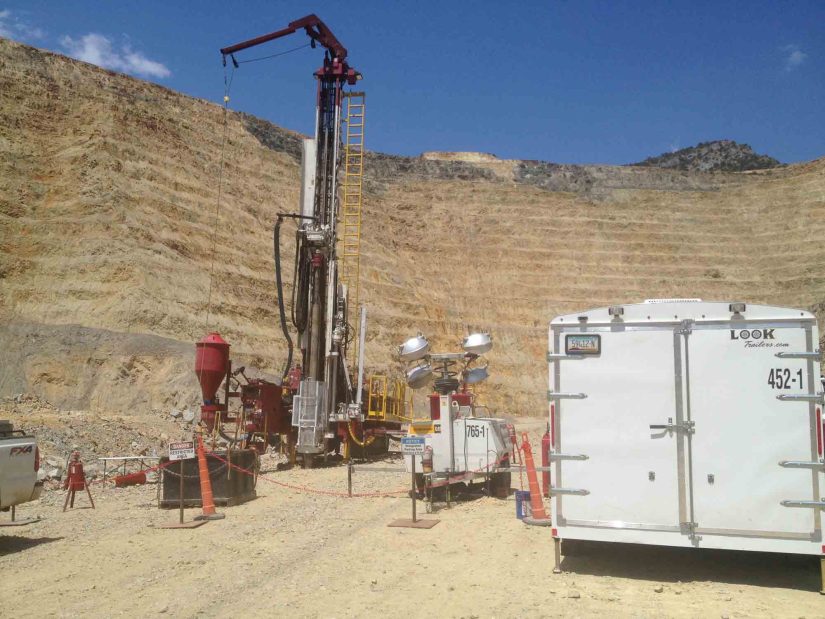
Mine dewatering continues to be on the rise for extraction of minerals, raw materials, and aggregate.
By Mike Price
Most groundwater industry professionals spend their careers drilling or servicing water wells for homeowners, communities, and perhaps commercial/industrial clients. Bringing clean water to those who need it is one of the most essential and rewarding jobs that exist.
However, there is another type of water well drilling and servicing that is just as important but not as well known. Dewatering. As the saying goes, “If it cannot be grown it must be mined.”
With the demand for everything from cellphones to tablets to electric cars increasing around the world, so is the demand for raw materials. It’s not just metals like copper and gold. Cement, crushed stone, sand, gravel, clay, and marl production (aggregate) have been steadily increasing every year.
One of the biggest threats to a safe and productive mining operation is water. Two main applications for dewatering are at a working mine so you can open pit mine deeper or underground mine deeper. The other is to drain old mines that may be in jeopardy.
What follows is an updated version of an article that first appeared in the November 2020 issue of Water Well Journal, “How to Secure Dewatering Mine Work.”
Things to Consider
In a surface mine, water can contribute to highwall instability, and in an underground mine, it can flood the workings, a standstill. Because of this, many mines have dewatering drilling programs with the goal of monitoring and removing groundwater in and around the mine.
These programs consist of new wells that need to be drilled, old wells that require servicing, and monitor wells that must be drilled and installed. These dewatering drilling programs are often considered essential and continue even when metal prices are down and other types of drilling projects are postponed.
The dewatering wells that are drilled are like normal water wells except that the water is not for drinking and not required to be potable. One thing to keep in mind when drilling in a mine, though, is that these wells are often drilled in hard formations. Many companies have to use equipment, bits, and drilling techniques they may not be as familiar with at first.
For example, drilling with large-diameter hammer bits, reverse circulation drilling, using auxiliary air compressors and boosters are just a few things that may be new to some companies. The existing wells that need servicing require everything from replacing pumps to replacing casing. The water in a mine can be acidic, and in some cases, will completely dissolve steel casing in a year or two.
MSHA Rules and Regulations
A drilling company that can safely operate on a mine site and comply with both the Mine Safety and Health Administration’s (MSHA) rules and regulations as well as the mine’s specific rules can potentially find consistent well-paying work on mine sites. Mines are now held accountable for the safety and compliance of the contractors working on their sites, so it’s in the mine’s best interest to work with contractors who fully understand these regulations.
One of the most valuable but underutilized resources to anyone new to mining is MSHA’s Educational, Field, and Small Mine Services (arlweb.msha.gov/epd/efsms). This part of MSHA is separate from enforcement and exists to educate and help.
There are four key areas of compliance that contractors must be prepared for before taking on any drilling project on a mine site:
- Training requirements: There are two main types of training required for working on a mine: New Miner training and Task training.
- Inspection requirements: MSHA mandates a wide variety of safety inspections from daily to monthly.
- Equipment guarding: Drilling rigs and other equipment must be equipped with appropriate guards to protect workers from moving parts.
- Required submissions: Contractors must document and submit their work hours and report any injuries to MSHA and certain state agencies.
Any contractor new to mining must go through MSHA’s “New Miner” training before working on a mine site. Some mining companies have allowed contractors to work at the mine for a couple days at a time through a back gate without training, but this is at best a gray area and could put both you and the mine in a bad spot.
The type of “New Miner” training required depends on what type of mine you are working at:
- Part 46 is required for certain surface mines (quarries, sand, and gravel)
- Part 48 is required for metal/non-metal mines (including surface and underground operations).
This training is available through certain state programs, universities, and third-party instructors. Often a local mine can provide you with some contacts. While there are some online courses approved by MSHA, they are not always accepted by mines, so do some research before signing up for any online course.
Task and New Miner Training
Task training is documented training for both the equipment you use and the routine tasks that you do as part of your workday. It does not matter if you have worked on a drilling rig since you could carry a pipe wrench—if you don’t have documented training to show MSHA, then in its eyes you are not trained.
Part 46 mines and Part 48 mines both have designated forms for documenting training, so know what is expected for that mine. There is a form called the “5000-23” that is accepted at all mines for documenting training, and this should be explained during your New Miner training.
The New Miner training will also explain the different types of inspections that are required. For example, before you can even begin work, you must complete a workplace exam.
MSHA requires a competent person to inspect the workplace at the start of every shift to identify and correct any safety deficiencies. This inspection must be documented and detail any safety deficiencies that are identified as well as the date the deficiency was corrected. Often this inspection is the first thing that a mine, state, or federal inspector will ask for during an inspection.
Mobile Equipment
Another type of inspection is the mobile equipment pre-operational inspection that must be completed before the equipment can be used. Everything from lights to parking brakes are required to be checked, and understand that these inspections must really be done and not “pencil whipped.”
There are a wide variety of other inspections required on a mine site, ranging from fire extinguishers to first aid kits to electrical tools to highwalls.
Guarding Requirements
Mine sites also have strict equipment guarding requirements—especially when it comes to drilling rigs.
A guard is required for all accessible moving or rotating parts. Yes, this does include drill rods. A rotation guard needs to be in place to prevent contact with the rotating rods, and winch drums need guarding if they are within reach of the people working.
One of the common equipment requirements that is often overlooked are current pressure vessel inspections on air receiver tanks. Mine sites require a documented pressure vessel inspection from a qualified inspector of all pressure vessels over a certain psi and volume, which varies from state to state. You can ask the mine if you are unsure of the requirements.
Submitting Information
Lastly, working on a mine site requires certain information to be submitted. From man-hours worked to any injuries that may have happened. There are also state mining agencies that require submittals, so know what the requirements are so you can stay in compliance. If you are working in a state with a state mining agency, make an appointment and sit down with someone in that office to better understand the requirements.
______________________________________________
Being able to safely work on a mine site and stay in compliance has the potential to expand your business and secure well-paying work for when the domestic water well market is on the downswing.
Just understand that working on a mine site takes investment in both time and money.
Time because your crews will require additional training and because of the inspections and paperwork that will need to be completed before work can begin. Money because time is money, but also because normal equipment that you may have been safely operating for years will need additional guarding, and in some cases, additional inspections.
This all may sound intimidating, but water well companies have been working on mine sites for years and they can be great clients to have.
–In addition to mining, groundwater removal is needed in construction and environmental remediation projects where it can hinder or compromise the stability of structures. This can be done with deep dewatering wells, wellpoints, eductors, or conventional sump and pump methods. Dewatering can be temporary or permanent and depletes the aquifer with deliberate overproduction that requires pumps designed to over-pump the well.
Maximum drawdown is naturally sought in dewatering and proper sizing of the filter pack and screen selection is necessary. Most contractors are equipped for this type of work.
—Water treatment is always a logical service to provide customers. There is revenue to be made from installation and service contracts. Contractors can educate themselves through seminars offered by water treatment manufacturers on their products. It’s also important to know the water quality in your area. What works for a contractor in another region might not work in your region. Groundwater chemistry varies greatly.
“I started offering water treatment because it was an open door,” says Ryan Bushong, CVCLD, president/owner of Bushong Drilling LLC in Marysville, Ohio. “Customers asked for it, so I started providing it within my first year of business [early 2015]. It accounts for about 15 percent of revenue and that’s without even trying to sell it.”
–With an eye on diversifying his business and adding another tool for well rehabilitation, National Ground Water Association Board Director Chauncey Leggett, CWD/PI, CVCLD, took delivery of his hydrofracking unit from Starr Hydro Inc. along with inflatable packers and associated equipment at the 2024 South Atlantic Jubilee in Myrtle Beach, South Carolina.
Leggett, president of Lake Valley Well Co. in Tarboro, North Carolina, is eager to learn how best to operate the standard hydrofracking unit that has a 75-horsepower Kubota engine on it. For hydrofracking purposes, Leggett plans to use it in the Raleigh/Durham area that typically yields not much water in wells drilled. He’ll pump about 85 gallons per minute and use the hydraulics on it to build up to about 3000 pounds per square inch (psi) for the rock formations he’ll be encountering.
East of Leggett’s location, for well cleaning predominantly polyvinyl chloride (PVC) screened wells that have high iron content, he’ll use a different packer that is capable of inflating to about 650 psi. Leggett has seen the plugging of these screens over the years but hasn’t had a good unit to use until now. He’ll be learning how to operate it while not compromising the well casing.
“Just by deciding to invest in a fracking machine has opened up more opportunities for me to service my clients and opportunities to generate more income,” says Leggett who ideally would have an additional employee operating the unit.
The challenge of learning new equipment sometimes comes with diversifying. Leggett understands that it’ll be trial and error but confident he’ll find the optimal way to operate the hydrofracking unit for both hydrofracking and well rehabilitation applications.
“We’re continuing to grow on the full-service well company that we’ve been creating and working with for 40 years on having that option to try to find the customer good, clean potable water,” he says.
_____________
NGWA published An Introduction to Water Well Hydrofracturing in 2016. The book is an update of the text Stuart Smith, CGWP, authored in 1989 titled Manual of Hydraulic Fracturing for Well Stimulation and Geologic Studies.
The book discusses how hydrofracturing is now an established method for well development and transmissivity enhancement, covers its use for large-scale public water supplies, has a chapter on state regulations, and details safety and sanitation for the jobs. Click here to learn more and purchase it, or call (800) 551-7379, fax (614) 898-7786, or email customerservice@ngwa.org.
 Mike Price is the senior editor of Water Well Journal. In addition to his WWJ responsibilities, Price contributes to the Association’s scientific publications. He can be reached at mprice@ngwa.org, or at (800) 551-7379, ext. 1541.
Read the Current Issue

you might also like
Click here to learn more about this workshop, Digitization of [...]

Some are brand new, others have been around awhile.


