
Managing Profit and Loss

Tracking cash flow, sales, expenses, and more is critical for water well and pump businesses.
By Ed Butts, PE, CPI
I want to address one of the most important but often overlooked elements of running any business: Tracking and managing profit and loss.
Whether a self-owned business, partnership, or a corporation, tracking and properly assigning cash flow, sales, and expenses to determine the profit and loss in your enterprise is crucial to ensure long-term viability and continuing success. So, let’s review the various aspects of cash flow, profit and loss (P&L) statements, and balance sheets.
Business Operating Documents
Some of the most fundamental aspects of business include three important elements of operations: the cash flow statement, balance sheet, and profit and loss (P&L) or income statement.
Data found in these three statements is used to calculate important financial ratios that provide insight to the company’s financial performance and potential issues that may need to be addressed. Each statement offers unique details with information that is all interconnected. Together the three statements give a comprehensive portrayal of the company’s operating activities and profitability.
The balance sheet is just one element of a properly prepared financial statement. No business owner can avoid occasionally reviewing this document, nor should they try. Even if the balance sheet for your business is updated daily, weekly, or monthly by an accountant, secretary, or yourself, the year-end statement should be prepared by an accountant or someone well versed in the mechanics of preparing financial documents.
Since your profit and ultimate tax burden will most likely depend on the numbers on those year-end reports, it is imperative they be complete, accurate, and hard to challenge by the IRS. It is just as important that your financial report consultant be up to date on current tax laws.
The routine and accurate preparation and update of these “pieces of paper” are vital to the health of your enterprise. In running a business, there are certain pieces of paper filled with information that are vital to the understanding of the current operational status of your business as well as the long-term expectations.
Even if you are not the one who runs the business, you might receive some balance sheets and income statements related to stock in a company you own or some other company in which you or your family have an interest. Or you might occasionally read about some big Fortune 500 business and wonder what they are talking about when they outline the company’s finances.
Heck, some day you may be running your own business, so I think everyone who deals with money should understand the basics of the most important “pieces of paper” that a business uses.
However, please remember that this discussion of balance sheets is given from the viewpoint of an individual simply trying to keep up with the language and mechanism of financially related information, not from a CPA, business consultant, or a banker, so be patient with me if your knowledge of financial statements exceeds mine.
Cash Flow Statement
A cash flow statement is a financial document that provides data regarding all cash inflows that a company receives from its ongoing operations and external investment sources. It also includes all cash outflows that pay for business activities and investments during a given period.
The cash flow statement is believed to be the most intuitive of the three financial statements because it follows the cash made by the business in three main ways: through operations, investment, and financing. The sum of these three segments is called net cash flow. These three different sections of a cash flow statement can help investors determine the value of a company’s stock or the company in its entirety.
What Are You? An Accrual or Cash Basis System?
A fundamental necessity of business accounting is a system needed for recording and recognizing expenses and revenue. There are two basic systems used: the accrual basis system and the cash system.
By far, the most commonly used corporate accounting system in the United States is the accrual basis of accounting. Under this system, revenue, purchases, and expenses are recognized and recorded when they are earned or incurred regardless of when the cash actually changes hands. In the cash system, generally only in current use by small firms and individuals, revenue is not reported until the cash is received and expenses are not reported until the cash is then disbursed.
The difference between these systems is an important factor to understand when evaluating balance sheets. This is because in the accrual basis system several expense items (shown under liabilities), such as employee vacations, pension, and payroll, are recorded as accrued expenses. The reason for this is even though the cash for these expenses may not have actually been spent, the obligation to the company is still present at the end of the accounting period.
Conversely, any revenue that may have also been earned (projects completed and billed) is also regarded as an accrued item even though the cash may have not yet been received, and under the accrual system, must also be recorded on the balance sheet.
The IRS typically prefers and requires most corporations to operate under the accrual system because they will automatically receive the tax benefit from revenue (sales) even though the corporation may have not yet received the actual money.
To summarize, the term of “accrued expenses” refers to those expenses or purchases that have been incurred even though payment may have not been made, and “accrued revenue” refers to the recognition of revenue or sales when it is earned, not when payment is received.
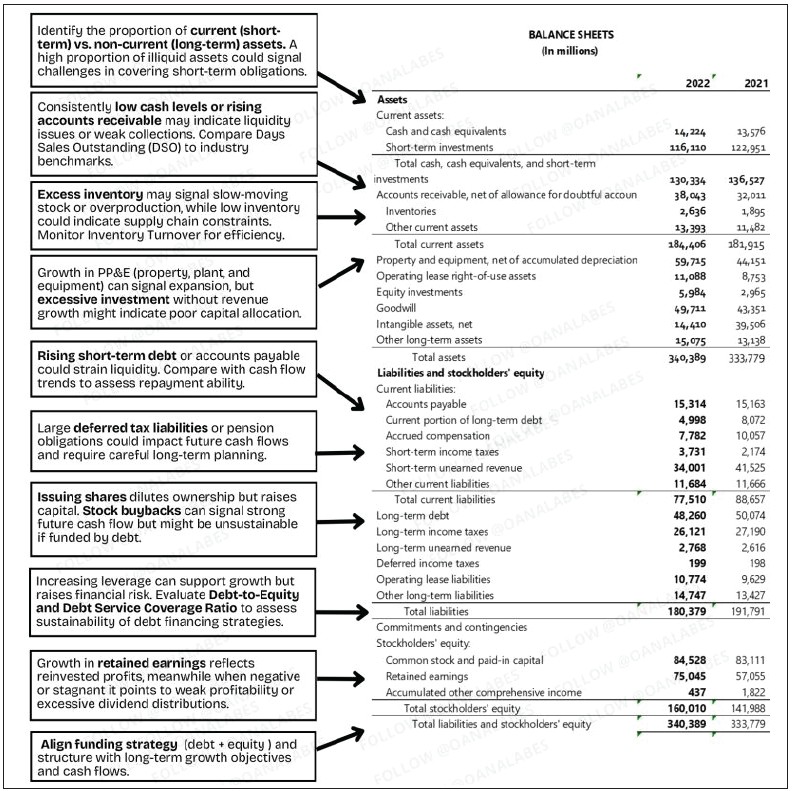
Figure 1. Elements of a corporate balance sheet.
Profit and Loss (P&L) Statement
A profit and loss (P&L) statement is another financial document that details a business’ revenue, expenses, and net income over a selected period (i.e., monthly, quarterly, or yearly). It describes where and how money flows in and out of a business. A P&L statement is also often called an income statement, a statement of profit, or a profit and loss report.
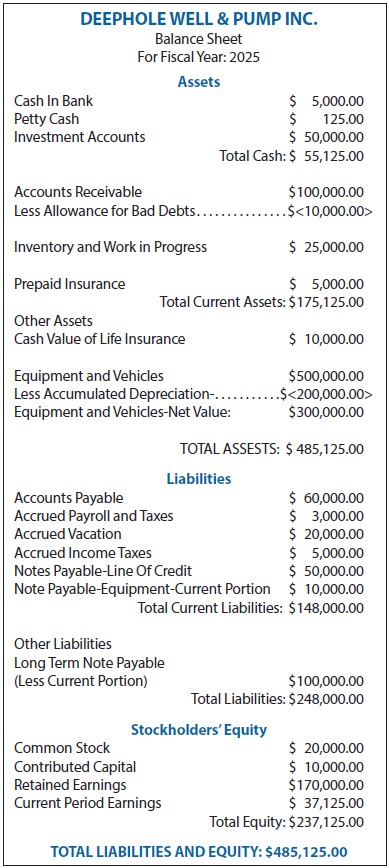
Figure 2. Typical corporate balance sheet.
Creating one is a standard accounting method to compile historical data for a business to detail its financial story over time. Typically, each monthly or quarterly reporting period, data is analyzed vertically to outline a business’ monetary allocation. Over time, a business owner can analyze the data horizontally in context with other profit and loss statements to help make informed financial decisions and forecasts.
A profit and loss statement is used to make the most informed choices for a business strategy and is an appraisal of how money works in a business and illustrates what changes are needed to increase profit.
Just What Is a Balance Sheet?
Assume that you pick up a piece of paper and make a list of everything that you own or has value to you. On this list, you attach a value to every item. On another sheet of paper, you then list everything that you owe to other people and apply a value to everything on this list too.
You then subtract the value of the second list from the first and show this result on the sheet as a separate entry. Viola! You have just created a basic balance sheet. A balance sheet is simply what the term means: it is an indication of the balance between the good (assets and equity) and bad (liabilities) elements existing in your business.
A balance sheet is used by bankers, accountants, bonding companies, and other financial people to gauge a snapshot of the current financial health of your business. It is an important, if not critical, indicator of your company’s ability to pay its obligations to creditors and suppliers as well as a summary of the company’s possessions, inventory, and cash instruments.
A balance sheet is usually the first piece of paper lending agencies and banks want to see when you apply for a loan, line of credit, or bonding. In most businesses, it is updated monthly and finalized for the year at the end of the company’s fiscal year.
It is divided into three general areas: assets, liabilities, and equity. The balance of the sheet is derived from the assets on one side balancing the liabilities and equity on the other as shown on the figure below:

or, as presented in a formula style: Assets = Liabilities (+) Equity
In a properly completed balance sheet, the numbers on the assets side must equal (or balance) the sum of the liabilities and equity. If the numbers do not balance, there is a mathematical or calculating error. The elements of a typical balance sheet are outlined in Figure 1 with each portion explained in greater detail as follows.
Assets
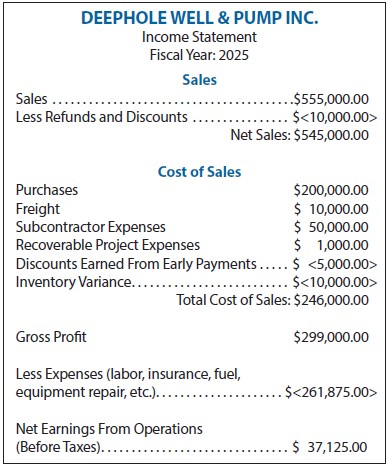
Figure 3. Typical income (P&L) statement.
Assets are resources, real estate, equipment, or other items of value to the business. These items have some type of future value to the business possessing either a short- or long-term value.
Items must pass three separate tests to be listed as assets. First, the company must control and have access to the item. Usually, but not always, this means that the company owns the item. The second test is the item must have some value to the company. Often, old and unusable vehicles or outdated inventory is excluded from the assets list because they may meet the first test but don’t meet the second test. The third test is that the item’s value must be measurable by an objective and reasonable standard.
This then excludes items from the third test such as personal or business reputation, past project history, past year’s performance, or company location. Although these certainly have a bearing on the company’s success and stability, their direct value cannot be measured using any traditional accounting methods.
These items, nonetheless, do contribute to a company’s value through terms often referred to as “blue-sky” or “goodwill” value. Although you will never see these items listed on a legitimate balance sheet, they still have an intrinsic value to the business, especially when determining a selling price for the business.
The third test is also the reason that employees are not listed as an asset; they certainly have a value and are under the control of the company (at least while working), but their value is impossible and impractical to measure using conventional means.
Assets are further divided on a balance sheet into current (short-term) assets and long-term assets. Simply, current assets are those that can be readily converted to cash (or are already cash or cash equivalents) within the company’s current fiscal period (generally the current calendar year). Short-term assets include cash, accounts receivable, inventory, and prepaid expenses (such as insurance, bonds, etc.).
Long-term assets are those that cannot, or are not expected to, be converted to cash within the current fiscal year. These assets usually include real estate, equipment, and buildings.
A final category of assets are intangible assets. These are assets that, even though they meet the above three tests, do not have tangible characteristics. This includes items such as patents, copyrights, and company trademarks.
Liabilities
Liabilities, like assets, are listed in the same manner: short-term or current (within the current fiscal year) and long-term (beyond the current fiscal year).
Liabilities include money or obligations owed to vendors and suppliers, money owed on short- and long-term contracts, remaining equipment payments, money owed to banks for lines of credit, and other expense items.
Additional liabilities include accrued expenses as described previously. This category includes employee vacations, payroll earned but not paid, pension expenses, and taxes. These are items that, while earned in the subject year, have not been paid.
A company’s liabilities are simply those items in which the company, at the end of the current reporting accounting period, owes money to an individual, company, supplier, vendor, employee, bank, tax agency, or any other entity. Under the accrual system, it includes those expenses that have been incurred whether or not payment has been made.
Equity
The equity, also referred to as owner’s or stockholders’ equity, is the difference between the assets and liabilities. Simply stated, it is the difference between what the company owns and what the company owes.
Equity commonly belongs to the owners of the company and is comprised of two elements: the owner’s investment (stock) and retained earnings. The owner’s investment includes all the money that the owner or owners have invested in the firm through stock purchases or direct cash infusion. It also includes the value of any stock issued in the company’s name.
There are various types of available stock options, such as common, preferred, and capital; particularly when corporations are involved. Discussion of the different types of stock is beyond the scope of this column, but all company stock regardless of type is usually included under the owner’s equity.
Retained earnings reflect the sum of all the net earnings (profit of the company after paying all expenses and taxes) left in the company through all the years of operation that were not previously distributed to shareholders or owners.
Typically, bonding companies and lending institutions like to see a regular and steady increase of the retained earnings each year. This progressive build-up of equity and cash helps to protect the company during lean times and also ensure the ability to borrow money when necessary at favorable terms and interest rates.
Ratios
Banks, bonding companies, and vendors will frequently ask to examine a company’s financial reports. These usually consist of the balance sheet and income statement. The income statement is the summary of the company’s actual performance of the current accounting period and reflects the individual itemization of revenue and expense items.
An income statement includes the individual revenue sources (including direct sales), cost of sales (including accounts payable, freight, direct project costs, bonding expenses, and subcontractors), as well as individual company expense categories (employee labor payroll, insurance, payroll taxes and insurance, fuel, equipment repair, office expenses, etc.).
The people examining a company’s financial statements will usually calculate several distinct and important ratios that examine a company’s current strength or vulnerability to financial problems. The most important and frequently used ratios include the following:

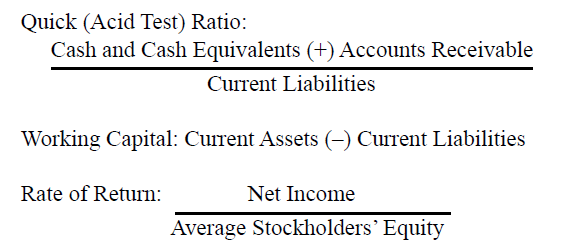
There are numerous other specialized ratios that are used for different aspects of a company’s financial and operational status. Figure 2 is an example of a year-end balance sheet for a fictional company that shows the typical elements of a balance sheet, while Figure 3 is an example of a year-end income statement for that same company.
I hope that this column has been beneficial to those of you interested in increasing your business knowledge. We’ll wrap up our year-long series on business-related topics next month with one of the most important aspects of business continuation: Customer satisfaction. We’ll look at that and how to promote and retain it along with conflict resolution methods.
Until then, work safe and smart.
 Ed Butts, PE, CPI, is the chief engineer at 4B Engineering & Consulting, Salem, Oregon. He has more than 40 years of experience in the water well business, specializing in engineering and business management. He was honored by the National Ground Water Association with the 2025 Technology Award. He can be reached at epbpe@juno.com.
Read the Current Issue

you might also like
Click here to learn more about this workshop, Digitization of [...]


Five communication habits that make customers want to say yes.


