Grouting with Bentonite

Gauging the impacts of pressure changes associated with grouting.
By Thom Hanna, PG, and Fred Rothauge, CWD
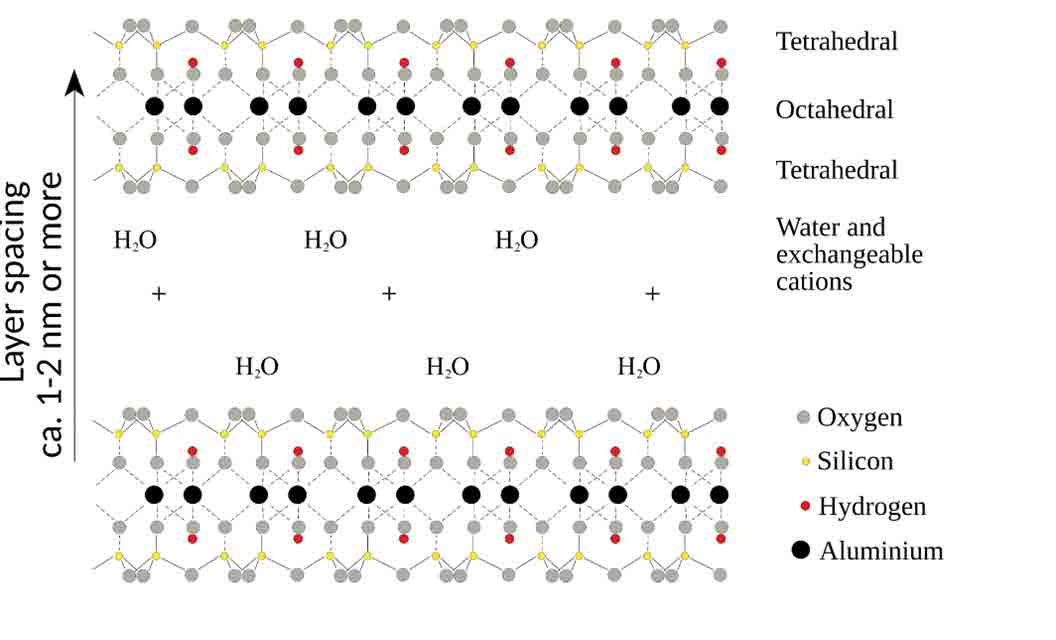
Figure 1. Detailed structure of montmorillonite hydrated by water between layers (Wikipedia 2019).
This column examines the use of bentonite grouts in well sealing, focusing on pressure changes during grouting to determine the forces exerted on casings that are being grouted.
The forces could be significant for creating a collapse of a PVC casing during grouting with bentonite. The study evaluates grout placement, curing behavior, and borehole stability to enhance industry best practices.
The first part of the study provides technical information and physical properties of bentonite grouts. The second part presents the results of some experiments that looked at pressure changes associated with grouting using bentonite slurries in a simulated borehole environment that was conducted with my good friend and colleague, Fred Rothauge, CWD.
A testing apparatus featuring a capped 6-inch Schedule 40 PVC casing with a 2-inch Schedule 40 PVC inner pipe was designed to measure pressure fluctuations during grouting. The apparatus allowed retrieval of a transducer post-testing to facilitate measurements of pressures induced by grout placement and curing.

Figure 2. Test apparatus for measuring grout annular grout pressures.
Bentonite slurries were prepared at 20% solids and conditioned with soda ash to optimize pH and hardness for well grouting applications. Grout was pumped via tremie pipe to simulate standard industry practices.
Findings highlight pressure trends during grout curing, offering insights into borehole stability and well-sealing efficacy when using bentonite.
Using Bentonite Grouts to Seal Water Wells
Bentonite is a naturally occurring clay mineral composed of montmorillonite, a member of the smectite mineral group known for its high water absorption and expansive characteristics. When hydrated, bentonite can swell up to 15 times its original dry volume, creating a gel-like consistency that is ideal for forming a low-permeability seal.
This swelling property is essential in groundwater management, particularly in well construction, as bentonite acts as a barrier to fluid movement, preventing cross-contamination between different water-bearing layers (Smith and Mudry 2010; Sterrett 2007). Bentonite’s unique properties make it invaluable in a range of applications with everything from well construction and abandonment to environmental protection.
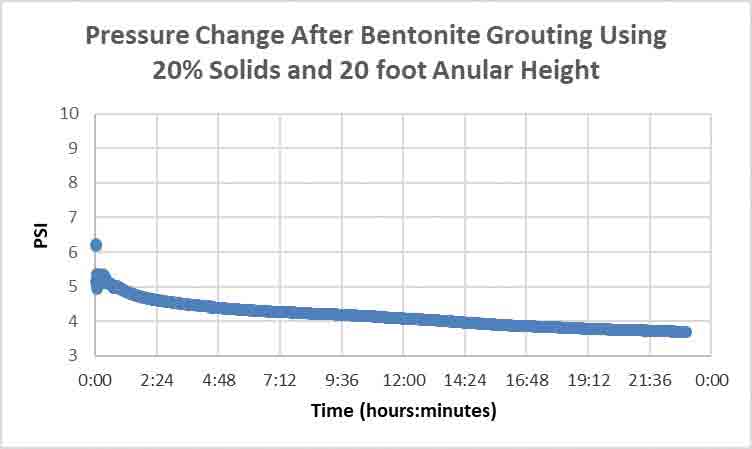
Figure 3. Measured pressure change in a 20-foot annulus.
Bentonite’s adaptability and effectiveness make it ideal for well construction and groundwater protection, forming stable, low-permeability seals around casings to prevent contamination and aquifer mixing. When properly applied, bentonite creates a stable seal around well casings, blocking potential contaminant pathways and stabilizing the borehole against pressure changes.
This is especially important for wells that access multiple aquifers, as bentonite prevents water migration between layers and ensures that different water-bearing zones remain uncontaminated (Smith and Mudry 2010; Sterrett 2007). In well abandonment, bentonite seals old wells, preventing them from acting as
conduits for surface contamination to reach groundwater.
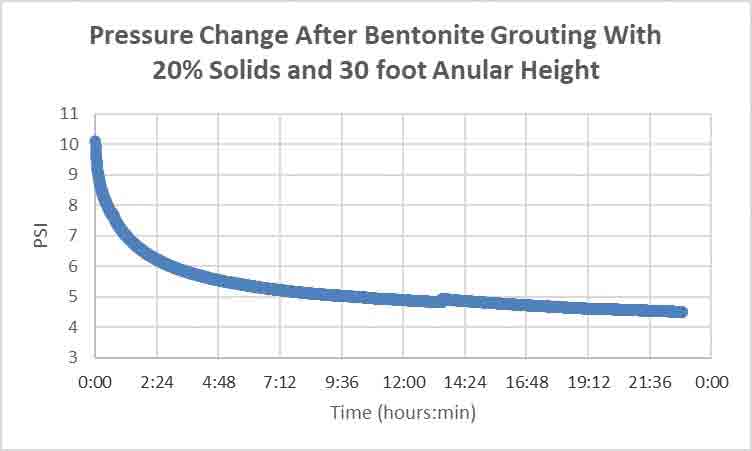
Figure 4. Measured pressure change in a 30-foot annulus.
Regulatory bodies often mandate bentonite in well construction and abandonment due to its demonstrated effectiveness in maintaining groundwater safety and resource quality over the long term (EPA 1993; Sterrett 2007).
Surface grouting with bentonite prevents contaminants from entering the well and potentially reaching the aquifer. This process involves placing a bentonite-based grout around the surface casing, effectively sealing the annular space between the casing and the borehole wall. This is crucial for stabilizing the casing, supporting borehole structure, and reducing the movement of water between aquifers of different depths.
Surface grouting is especially important for wells situated near potential contamination sources such as agricultural fields, industrial areas, or septic systems (AquaBlok Ltd. n.d.; Sterrett 2007). Regulatory requirements for high-capacity municipal and industrial wells often stipulate minimum grout seals to ensure groundwater quality is maintained, and bentonite is commonly chosen due to its swelling properties and low permeability (Sterrett 2007; EPA 1993).
Properties of Bentonite Grouts

Figure 5. Measured pressure change in a 40-foot annulus.
The performance of bentonite as a sealant is due to the layered silicate structure of montmorillonite. Montmorillonite consists of layered silicate sheets with alternating aluminum and magnesium hydroxide layers interspersed with silica sheets. This structure allows water and ions to penetrate, causing expansion and forming an effective seal.
This structure drives bentonite’s swelling capability, as water and ions move between layers, increasing the mineral’s volume (Figure 1). This property is especially valuable in sealing applications because the layers can adapt to fill voids, conform to irregular surfaces, and stabilize surrounding geologic formations.
Bentonite’s flexibility and adaptability allow it to maintain a continuous, low-permeability seal, even under changing environmental pressures, making it an essential material in water well construction and groundwater management (Sterrett 2007; Murray 2007). However, if the bentonite seal is allowed to dry out, it can crack, and the seal can become compromised.
In addition to its physical adaptability, bentonite’s chemical composition is key to its effectiveness as a well sealant. The montmorillonite in bentonite carries a negative charge, which attracts and binds positively charged ions such as calcium, sodium, and magnesium. These ions stabilize the surrounding geological materials, enhancing borehole integrity and improving the seal’s effectiveness (EPA 1993; Smith and Mudry 2010).
However, bentonite’s performance may be affected by specific groundwater conditions. For example, high chloride or calcium concentrations can limit its swelling capacity, reducing the seal’s long-term stability. Field studies indicate that incorporating polymer additives can counteract these effects by increasing grout viscosity, enhancing durability, and minimizing the risk of shrinkage or cracking (Ball, Izbicki, and Morrow 2013; Sterrett 2007).
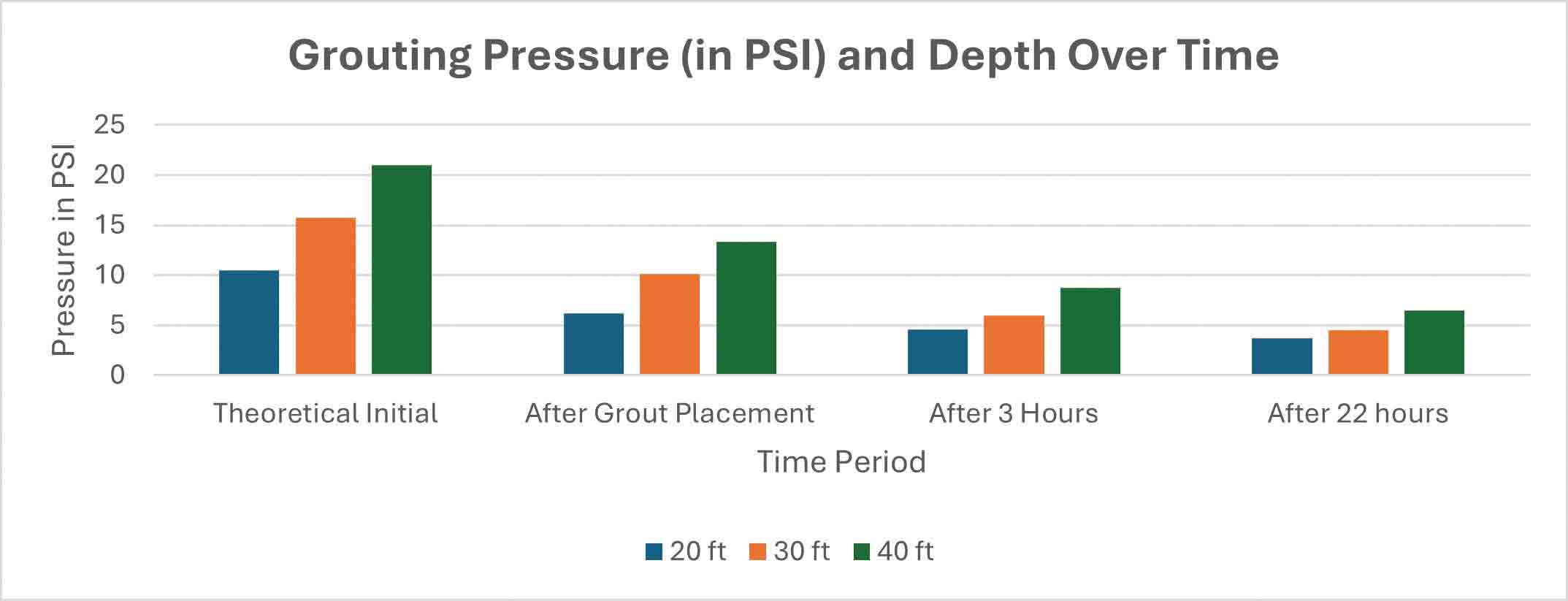
Figure 6. Comparison of grouting pressures with depth and time.
Types and Forms of Bentonite Grout
Various formulations of bentonite are available to meet the demands of different groundwater applications:
1. Sodium Bentonite: With a higher swelling capacity than other types, sodium bentonite is preferred for water well construction due to its ability to form dense, low-permeability barriers that prevent contaminant migration and water flow between aquifer zones (Sterrett 2007; Driscoll 1986). This type is particularly effective in wells that require a robust, dependable seal.
2. Calcium Bentonite: Although it swells less than sodium bentonite, calcium bentonite is often used in geological settings where controlled swelling is essential to prevent excessive pressure or deformation. This makes it suitable in formations where higher swelling could cause structural issues (Murray 2007).
3. Powdered and Granular Forms: Bentonite is available in both powdered and granular forms, enabling versatile application. Powdered bentonite, when mixed with water, forms a pumpable slurry that is useful in deep borehole applications, while granular bentonite can be poured directly into annular spaces around well casings or other shallow applications, creating an effective seal.
These different forms allow water well professionals to adapt bentonite application to specific project needs, ensuring that the most effective form is chosen based on the depth, soil conditions, and type of well being constructed or sealed.
The selection of materials for bentonite grout is based on the demands of the well and local environmental conditions. Sodium bentonite is frequently chosen because of its swelling ability, which allows it to form an impermeable barrier around the well casing. Calcium bentonite, while less expansive, may be used where controlled swelling is more suitable (Driscoll 1986).
In some cases, bentonite is blended with cement to enhance the grout’s density and structural stability, which is advantageous in large annular spaces or deep wells where additional support is required.
The addition of polymer additives to the grout can increase its viscosity and durability, improving uniformity and minimizing shrinkage. These features are essential in areas with varying temperatures or water chemistries where grout performance might otherwise be compromised (Sterrett 2007; Ball, Izbicki, and Morrow 2013).
Grouting Procedures and Best Practices
Mixing bentonite grout involves combining it with clean water to reach the desired consistency, typically 20% to 30% solids by weight.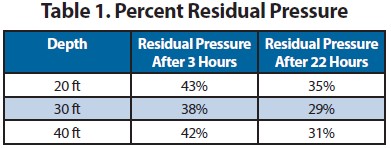
Placement techniques, such as the use of a tremie pipe, are recommended for applying grout from the bottom up, which minimizes the risk of air pockets and ensures a continuous, even seal.
Following placement, maintaining moisture during curing is essential for full hydration, which maximizes swelling and prevents cracking. Regular hydration monitoring during the curing phase ensures that the grout expands completely and maintains its integrity over time (AquaBlok Ltd. n.d.; Sterrett 2007).
It is important not to overmix the grout slurry. The slurry should have a cake batter or oatmeal consistency containing lumps of partially unyielded bentonite. Mixing times of 20-30 seconds per 50-pound sack is best and the estimated working time to have this material pumped is between 5-15 minutes.
The effectiveness of bentonite grout relies on precise mixing ratios, proper placement, and controlled hydration. In deep wells, even distribution of grout is critical to prevent gaps or uneven application. The tremie pipe placement technique is widely used to ensure grout is applied consistently from the bottom of the borehole upwards, preventing air voids that could compromise the seal (EPA 1993; Houben and Treskatis 2007).
High solids grout should be pumped through tremie pipe from the bottom of the grout interval upwards while maintaining submergence a minimum of 10 feet into the grout column for uniform displacement.
Avoid using centrifugal pumps. Instead, mix grout with a paddle mixer and pump using a Bowie pump or a progressive cavity rotor-stator pump for optimal consistency and displacement. These pumps are positive displacement pumps and are often fed by an auger from the mixer.
Challenges and Considerations in Surface Grouting
While bentonite is highly effective, several factors can influence its performance. For instance, high groundwater salinity can limit the swelling of sodium bentonite, leading to a reduced seal.
When considering bentonite grout, it is important to recognize that bentonite has limitations in areas where formation or makeup water has a total hardness greater than 500 ppm (parts per million) or a chloride content exceeding 1500 ppm. To address this, polymer-enhanced bentonite or bentonite-cement
blends may be used, as these formulations provide additional stability and are not as affected by salinity.
Soil conditions are also important. In highly permeable soils, bentonite may require additional additives to maintain moisture and prevent shrinkage (Ball, Izbicki, and Morrow 2013; Sterrett 2007).
Testing Materials and Methods
This study measured downhole pressure and setting time for a 20% solids bentonite grout. A test apparatus was constructed with a 6-inch Schedule 40 PVC pipe (outer casing) and a 2-inch Schedule 40 PVC pipe (inner casing) suspended within the outer casing. A transducer was securely sealed at the bottom of the 2-inch PVC pipe to monitor pressure changes during grout curing (Figure 2). Bentonite slurry filled the annulus (space between the 6-inch and 2-inch pipes), replicating a well-grouting scenario.
This setup was held in suspension in a cased borehole with the apparatus positioned at ground level to allow for controlled testing and retrieval of the transducer post-curing.
Bentonite Slurry Preparation and Grout Placement
Bentonite slurry mixtures were prepared with 20% solids concentration, a standard ratio for well grouting applications. Tap water was added to a mixing tank and treated with soda ash to raise the pH to approximately 9. This adjustment countered water hardness and facilitated optimal mixing conditions for the bentonite.
A 20% solids bentonite slurry was prepared by mixing 0.5 pounds of bentonite per 30.5 ounces of water in a paddle loop mixer for 20 minutes to achieve. This resulted in a mixture that is 10.11 lbs/gal which translates to an annular pressure of 0.525 psi/ft.
Grout placement was conducted using a tremie pipe positioned to direct the bentonite slurry to the bottom of the annular space. This method minimized air entrapment and ensured consistent grout coverage from the bottom up, simulating the industry-standard approach for well grouting.
The transducer in the inner PVC casing continuously recorded pressure changes during the grout curing process.
Testing
The test well annulus was used to measure grouting pressures by grouting an annulus of 20 feet, 30 feet, and 40 feet in length. In each test, the grout was placed in the annulus using a 1-inch tremie pipe inserted to the bottom of the annulus and pumping grout from the bottom up.
It took 7 to 20 minutes to complete the grouting process and remove the tremie pipe. Measurements or grout pressure were measured overnight for approximately 23 hours (Figures 3, 4, and 5).
The initial pressures are not shown on the graphs as they fluctuated during grout installation and to better present the pressure changes over time. However, none of the boreholes realized the full potential of maximum bottom hole pressure.
After full loading of the hole, the pressure went up to about 40% of the calculated maximum bottom hole pressure for a liquid (Figure 6 and Table 1). After setting overnight, the transducer was retrieved, allowing for analysis of the pressure dynamics observed as the bentonite slurry transformed from a fluid state to a set grout.
Results and Discussion
The pressure readings indicated a gradual increase during grout placement, followed by stabilization as the slurry settled. Notable pressure shifts occurred during the initial stages of curing, attributable to the bentonite’s hydration and swelling properties.
The 20% solids bentonite slurry created a consistent seal with minimal fluctuations in pressure once fully set, demonstrating effective containment of the simulated borehole environment. With deeper grout segments it is noted that the grout length to pressure rate is reduced as the grout sets and the full pressure transient is not seen at the bottom of the grout column (Figure 6).
The results affirm the usefulness of bentonite grouts in well-sealing applications, highlighting the material’s capacity to create a low-permeability barrier with limited pressure-induced risks to borehole stability. Additionally, the setup allowed for straightforward transducer retrieval, ensuring reliable data capture and practical applicability in real-world testing environments.
The findings underscore the importance of controlled grouting conditions, particularly during grout placement and initial curing stages. Proper mixing, pH adjustment, and the use of a tremie pipe contribute to an effective seal, while minimizing risks of pressure-induced disruptions in borehole integrity.
Grouting with bentonite provides an adaptable method for sealing wells in a range of geological conditions, with this study’s controlled approach serving as a model for field applications.
Wait time between grout lifts using bentonite should be approximately three hours to allow the grout to set up. It does appear after three hours the grout should support the weight of additional grout stages if deep grouting is needed and there is the potential for collapsing a casing.
These shallow test results suggest that bentonite grout retains approximately 40% of its bottom-hole pressure after three hours and 30% after 22 hours. There are many factors that go into the pressures that will be realized during grouting with bentonite, including geologic materials and location of the static water level that might or might not keep the grout hydrated.
I have always wondered about grouting with bentonite and what the downhole pressures would be. I searched for information from available sources and providers of bentonite grouting products and could not find the information I was looking for, so Fred and I had some fun and learned a lot along the way.
I often get questions about how deep you can complete a well using PVC. If you do not exceed the strengths of the PVC, you can go deep. But typically, the limiting factor is the collapse strength.
References
AquaBlok Ltd. (n.d.). Bentonite-Based Grouting Materials for Sealing Wells and Boreholes: Technical Information.
Ball, J.W., J.A. Izbicki, and A.L. Morrow. 2013. “Effectiveness of Well Sealing Materials in Protecting Groundwater Quality: Laboratory Tests of Hydration, Shrinkage, and Fluid Loss in Bentonite Grouts”. Journal of Environmental Quality 42, no. 1: 35-45.
Driscoll, F.G. 1986. Groundwater & Wells, 2nd Edition. Johnson Filtration Systems Inc.
Houben, G. and C. Treskatis. 2007. Water Well Rehabilitation and Reconstruction. McGraw-Hill Professional.
Murray, H.H. 2007. Applied Clay Mineralogy: Occurrences, Processing, and Applications of Kaolins, Bentonites, Palygorskite-Sepiolite, and Common Clays. Elsevier.
Smith, C.L. and B. Mudry. 2010. Handbook of Groundwater Engineering, 2nd Edition. CRC Press.
Sterrett, R J. 2007. Groundwater & Wells, Third Edition. Johnson Screens.
Wikipedia. 2019. Bentonite. Wikimedia Foundation. en.wikipedia.org/wiki/bentonite.
 industry.
It features 20 years of advancements in technology and knowledge gained in the field. Included are new borehole geophysical techniques, information on underbalanced and horizontal drilling, new approaches to well development, as well as details on ASR, groundwater monitoring and remediation, prepack screens for water interactive well design and well maintenance programs for water well contractors and design engineers.
Click here to order it, call (800) 551-7379, fax (614) 898-7786, or email customerservice@ngwa.org.
 Thomas M. Hanna, PG, is a technical director of water well products/hydrogeologist for Johnson Screens where he works in areas of well design, development, and well rehabilitation. He is a registered professional geologist in Arizona, Kentucky, and Wyoming and has worked for several groundwater consulting firms. Hanna can be reached at thom.hanna@johnsonscreens.com.
 Fred Rothauge, CWD, is a technical advisor for Hydro Resources Inc. in Fort Lupton, Colorado. He has more than 40 years in the drilling and drilling fluids engineering business. He served as the Groundwater Foundation’s 2023 McEllhiney Lecturer and is currently on the NGWA Board of Directors. He can be reached at frothauge@hydroresources.com.
Read the Current Issue

you might also like

Study shows that both have their place and it depends on project objectives.

INTRIC Grouting Solutions Inc.'s systems are built around field experience and reliable performance.